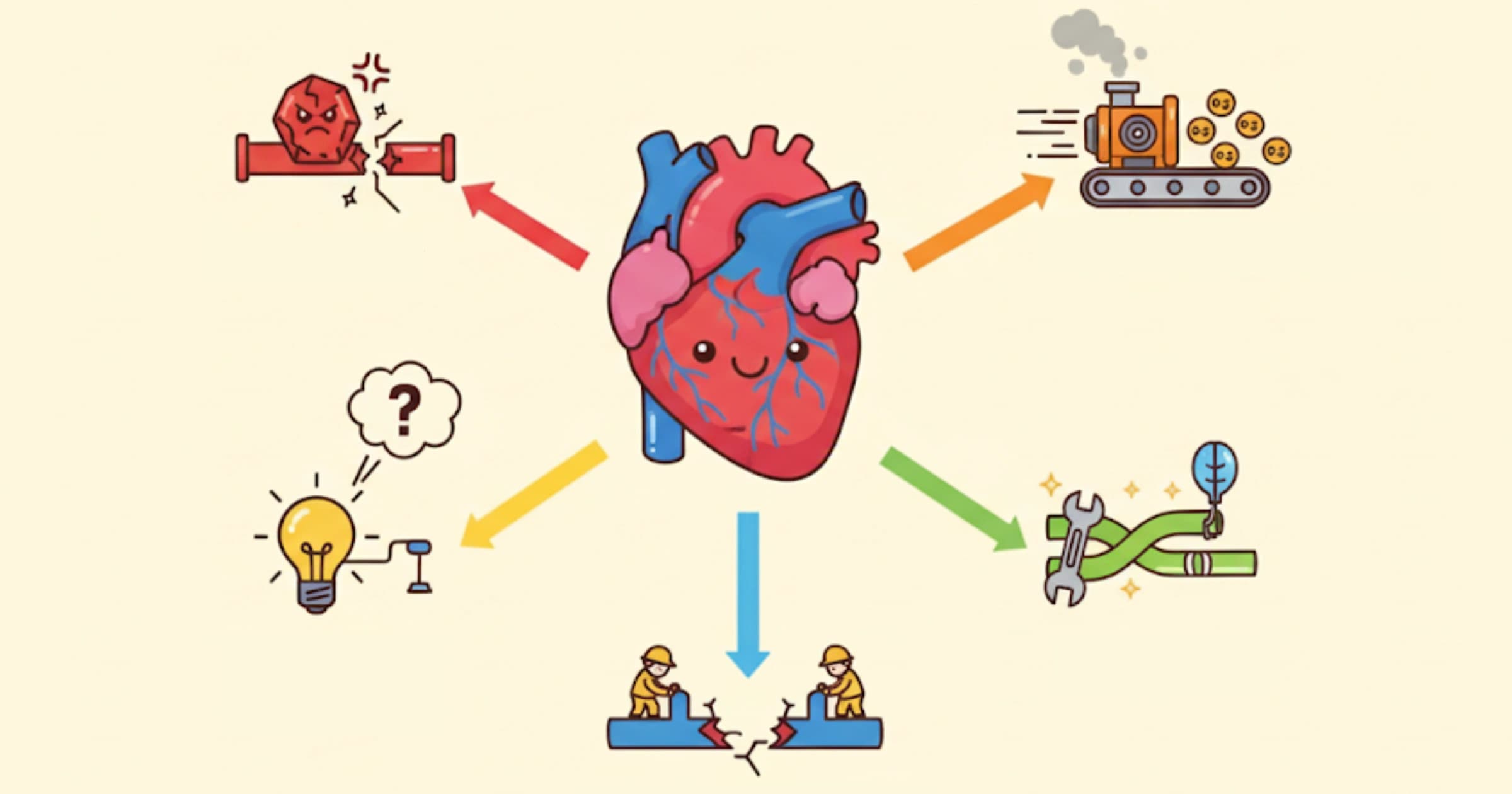

The biggest critics of full-body MRI screening share a common assumption: that what you don't know can't hurt you. But is this true?
Recently, JAMA and the American College of Radiology (ACR) released statements against elective whole-body MRI for asymptomatic people on the basis that it leads to overdiagnosis and anxiety.
These are serious concerns — not completely unfounded, but built on a narrower, outdated framework that systematically undervalues the function of what modern full-body imaging is able to offer in diagnostic medicine.
This is a case for rethinking the argument from the ground up.
Unpacking the Case Against Full-Body Screening
The core criticism rests on incidental findings, a.k.a. findings discovered during a scan that weren't the original target that, critics argue, may never have caused harm if left undetected.
The idea is that these findings trigger follow-up testing, invasive procedures, and emotional distress, where net harm outweighs the benefits for the average asymptomatic person.
The truth is, in an age with more environmental agonists than ever, 1-in-2 cancer rates, and a fast-changing disease data baseline in young adults and aging populations alike, our larger sociopolitical environment already had a decisive hand in creating the perfect circumstances for our current culture of anxiety & health obsession.
Our fixation on health has already swung the pendulum towards excess distress and health-related anxieties. And for good reason.
To meet our concerns where they originate, technology in medical imaging continues to innovate on ways to assuage our concerns on health: Full-Body MRIs has been a prime, accessible & safe example of that. As much as screening tool as it is a diagnostic necessity in many ailments, MRI is a recognized mainstay in modern medicine.
The public demand for more accessible use of this technology is also not born from a vacuum, but is developed with full apprehension of the historical trauma left by gaps in the traditional healthcare system.
Modern Full-Body MRI fulfills this gap in demand.
From comfort to catching cancer in its most treatable stages, the knowledge and peace of mind from diagnostic imaging has provided often priceless value to the individual and families of the care-receiver.
Now we can systematically review and unpack some of the top mischaracterizations regarding whole-body imaging:
500+ Condition Scan
Critics often only quote cancer discovery rates (2 in 100 scans) to caution against overall usefulness, framing whole-body MRIs like a single-target tool evaluated against a single-disease detection benchmark.
In addition to finding early stage cancers, the modern full-body MRI evaluates over 500 distinct findings across every organ system, most notably:
- Neurological conditions like white matter disease, brain atrophy, multiple sclerosis, and normal pressure hydrocephalus;
- Cardiovascular findings like aortic & brain aneurysms, carotid artery stenosis, and pericardial effusion;
- Musculoskeletal issues like spinal stenosis, avascular necrosis, rheumatoid arthritis, joint effusions, and rotator cuff tears;
- Endocrine abnormalities in the thyroid, adrenal glands, and pancreas;
- And organ-specific findings in the liver, kidneys, bladder, uterus, prostate, and more.
No blood panel, symptom-based referral, or single-organ scan comes close to that breadth in a single session.
Catching these conditions in their nascent asymptomatic stage are a blessing on lowering mortality rates, reducing life-altering consequences, and truthfully, less stress awaiting the medical bill.
Aneurysms are a top example: asymptomatic & vastly life-altering upon disease progression, but very easy to spot on MRIs, and consequently to treat & to resolve.
The “Overdiagnosis” Critique Ignores Existing Underdiagnosis
The critics' central concern that detecting something harmless triggers harmful overtreatment is real in isolated cases. But the counterweight they never adequately address is the staggering cost of underdiagnosis in the current system.
An estimated 795,000 Americans are killed or permanently disabled every year because of diagnostic errors, with approximately 371,000 of those resulting in death. Stroke alone is missed in 17.5% of cases. The current diagnostic error rate is 10-15%.
In a world where information is power, the power to act is in your hands with a full-body MRI, you can choose what to do with the information — act on it or not. Imaging itself has no biases, and cannot misdiagnose.
Symptom-Based Medicine Has a Localization Problem
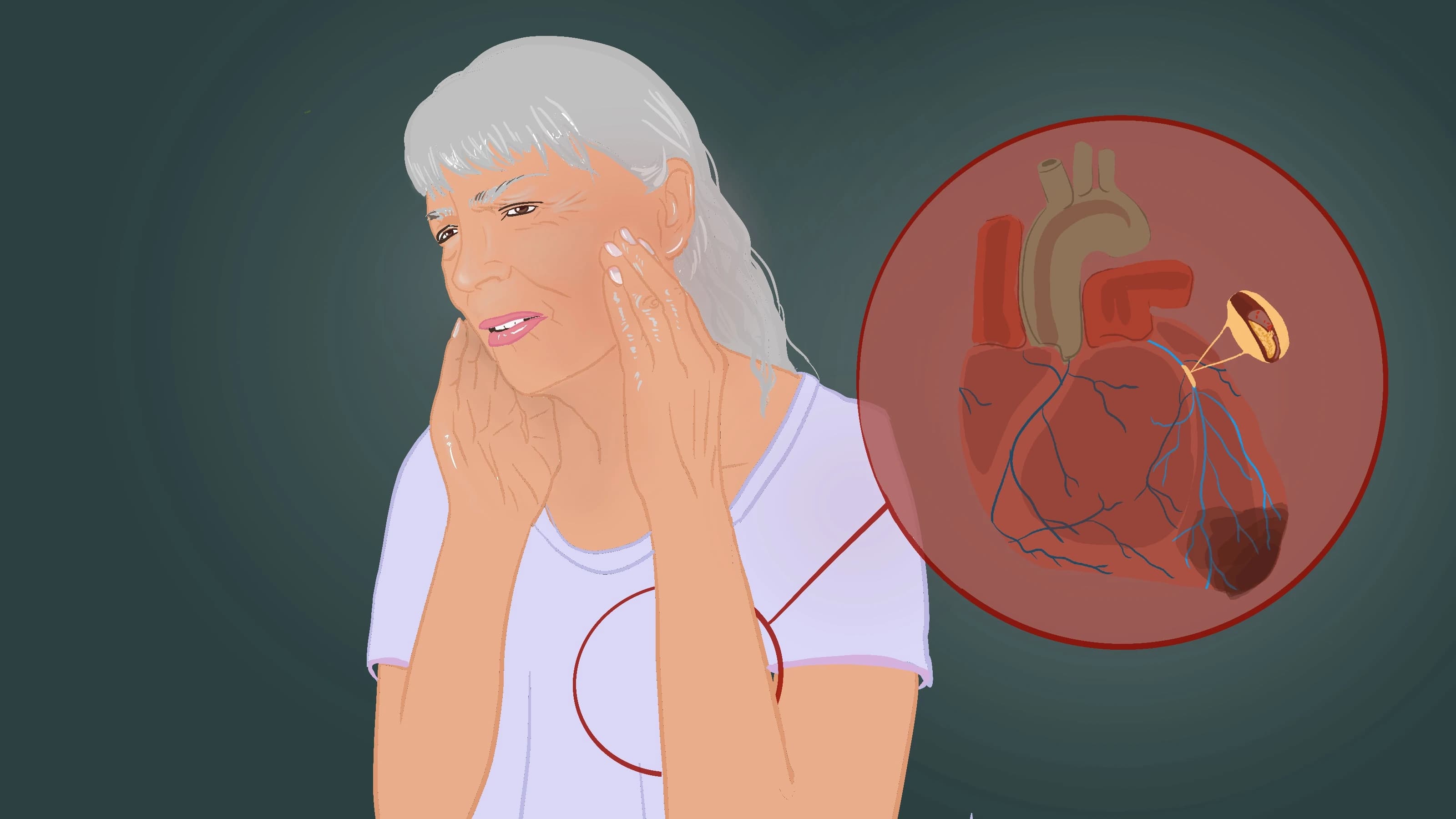
The traditional model of care works on the assumption that the body announces where the problem is. A patient presents with a symptom, a physician examines the affected region, and a targeted test follows.
This works well when the symptom and the disease are co-located, but they often are not.
Referred pain is ubiquitous in medicine: shoulder pain from gallbladder disease, jaw pain from cardiac ischemia, back pain from kidney stones or pancreatic pathology. A patient who presents with fatigue, headaches, or nonspecific abdominal discomfort may spend years cycling through specialist referrals, while the root cause sits somewhere no one has looked. Full-Body MRI can eliminate that fragmentation in a single scan.
The Medical System Has Been Playing Catch-up
Evidence-based guidelines are built on historical data, and we've seen medicine changes faster than guidelines update.
Colorectal cancer is now the leading cause of cancer-related death among adults under 50 in the United States. New colorectal cancer cases are rising 3% per year in adults aged 20–49, and nearly half of all colorectal cancer diagnoses now occur in adults under 65, up 23% from 1995.
The standard screening age recommendation of 45 only recently dropped from 50, after decades during which young adults were told they didn't need to worry. Three in four colorectal cancers in adults under 50 are already at an advanced stage at diagnosis.
Time is Money: Making Time for Multiple Appointments Is Not Trivial
Outsiders often assume patients who don't get a full-body scan will instead get a thorough, systematic, multi-specialist workup that covers every organ system. That is not how most people experience healthcare.
A full-body MRI covers the brain, spine, thorax, abdomen, pelvis, and major joints in a single appointment that takes roughly one hour.
The alternative, replicating that breadth through individual referrals, involves separate appointments for a neurologist, cardiologist, gastroenterologist, urologist, and orthopedist, each requiring a referral, an insurance authorization, and a waiting period that may stretch months.
For working adults managing busy careers and families, that is not a realistic pathway to comprehensive health information.
Efficiency is not a luxury argument. For a population that defers healthcare because it is time-consuming, a comprehensive single-visit scan may be the difference between something getting caught and something getting missed.
Expert Radiology Eliminates False-Positive Problem
The critics' strongest point may be the false-positive risk: findings that appear abnormal on imaging but turn out to be benign, leading to biopsies and procedures that carry their own risks.
This depends enormously on radiologist expertise and reporting quality. A well-constructed full-body MRI performed at a dedicated screening facility by experienced radiologists, with findings graded by clinical significance, produces a meaningfully different result than a general-purpose scan read by a generalist. The concern about false positives is not an argument against full-body MRI but for doing it properly.
A 2016 prospective study published in PMC found that whole-body MRI successfully identified a wide range of clinically significant findings in asymptomatic patients, with approximately 5% of the screened population going on to receive treatment directly resulting from scan findings, and notably, without the cascade of radiation exposure associated with CT-based screening.
No Ionizing Radiation. No Contrast Dyes. No Negatives.
The USPSTF's concerns are also historically shaped by the era of full-body CT scanning, which did expose patients to non-trivial ionizing radiation. MRI uses magnetic fields and radio waves. There is no ionizing radiation.
The “do more harm than good” framing was more defensible when the primary full-body screening modality, especially on a repeated basis, subjected patients to elevated cancer risk. Applied without modification to MRI, it relies on a risk that does not exist.
Peace of Mind Has Clinical Value
There is a dimension of this argument that institutional medicine tends to dismiss as soft: the psychological value of knowing your body is healthy.
Anxiety about undetected illness is one of the most common drivers of unnecessary emergency room visits, repeated symptomatic consultations, and self-directed (often inaccurate) health research. A comprehensive, expert-read, negative or well-characterized scan result reduces that uncertainty in a way that an annual physical cannot replicate.
Conversely, for the person who gets a scan and finds something treatable before it becomes critical, that scan did not cause harm. It prevented it. That person's story does not typically end up in a JAMA viewpoint.
Who Gets to Make This Decision
Critics frame the full-body MRI debate as a population-level public health question, asking whether asymptomatic adults as a group benefit from routine whole-body screening. At the population level, the evidence is still developing.
But an individual who is informed, financially capable, and motivated to understand their own body is not making a population-level decision. They are making a personal one, and they have access to a technology that carries no radiation, requires no surgery, causes no tissue damage, and produces detailed, expert-analyzed information for just about every health condition across all organ systems.
The Baseline Argument
One of the most underutilized arguments for full-body screening is a longitudinal one. A single scan, even if it returns no urgent findings, establishes a documented anatomical and physiological baseline: what your brain looks like at 35, what your liver measures at 40, what your spine shows at 45. When something changes, that baseline is the reference against which the change is measured.
This is not a hypothetical benefit. It is the difference between a radiologist seeing a 4mm brain lesion and saying “we don't know what this is” versus seeing it in the context of a prior scan that showed the same lesion, stable, for five years. Continuity of imaging data is one of the most important tools in early detection medicine. A first scan is also the first data point in a much longer record.
The Imaging Takeaway
The critics are not entirely wrong. Incidental findings can cause anxiety. Poor-quality screening programs exist. Follow-up procedures carry risk. These are real concerns that any reputable full-body MRI program should take seriously.
But the argument that “you are better off not knowing” cannot be sustained against the weight of evidence that diagnostic errors kill hundreds of thousands of Americans annually, that the body does not always announce where its problems are, that the medical system is not fully current on fast-moving disease trends, and that a comprehensive, no-radiation, expert-interpreted scan of your entire body is now a realistic option for people who choose to prioritize their health proactively.
The critics are asking the wrong question. The question is not so simply “could this cause harm?” but “how many lives are made better?” This is harder to measure, and we might never get an accurate answer, but families that have incidental imaging to thank for healthy loved ones know that value by heart.
References
[1] Davenport MS, Reeder SB. Elective MRI Screening of the General Public—Buyer Beware. JAMA. 2026;335(21):1839–1840. link
[2] Newman-Toker, D. E., Nassery, N., Schaffer, A. C., Yu-Moe, C. W., Clemens, G. D., Wang, Z., Zhu, Y., Saber Tehrani, A. S., Fanai, M., Hassoon, A., & Siegal, D. (2024). Burden of serious harms from diagnostic error in the USA. BMJ quality & safety, 33(2), 109–120. link
[3] Ulus, S., Suleyman, E., Ozcan, U. A., & Karaarslan, E. (2016). Whole-Body MRI Screening in Asymptomatic Subjects; Preliminary Experience and Long-Term Follow-Up Findings. Polish journal of radiology, 81, 407–414. link
[4] Kwee, R. M., & Kwee, T. C. (2019). Whole-body MRI for preventive health screening: A systematic review of the literature. Journal of magnetic resonance imaging : JMRI, 50(5), 1489–1503. link
[5] Stoffel, E. M., & Murphy, C. C. (2020). Epidemiology and Mechanisms of the Increasing Incidence of Colon and Rectal Cancers in Young Adults. Gastroenterology, 158(2), 341–353. link